
"can be produced"
50000 article(s) found

How many coffee beans can a coffee tree produce in a year?
How many coffee beans can a coffee tree produce in a year to grow into a high-harvest and high-quality coffee tree? it is necessary to take good care of and select the seedlings. Generally, they begin to sprout about 40 days after sowing, and then transplant them to the greenhouse before they can grow into saplings. Wait until the saplings grow to 40-50 cm high before choosing the healthier saplings to be transplanted to the farm. This approach is more traditional, but only

Introduction to the description and treatment of taste and flavor in producing areas of coffee grindability characteristics of Silver Mountain Manor in Jamaica
From the above, we can get a general picture of the production of Blue Mountain Coffee. It should be noted that 99.9% of the blue mountains that can be drunk in China are only grown near the Blue Mountains. Only coffee produced on 6000 hectares above 1600 meters above sea level can be called Blue Mountain, and the yield is always less than 900t. According to the principle of 10% supply to the world outside Japan, this kind of coffee can be called Blue Mountain.

The basic knowledge of coffee beans coffee three original species introduction
Coffee belongs to the evergreen shrubs of the genus Coffee of Rubiaceae, centered in tropical regions, with about 500 genera and 6000 species of Rubiaceae plants distributed here. Coffee has long been thought to have certain medicinal effects, such as invigorating stomach, refreshing mind, stopping bleeding, dissipating heat, strengthening body, etc. More famous Rubiaceae plants and gardenia, its fruit has long been dried as medicine
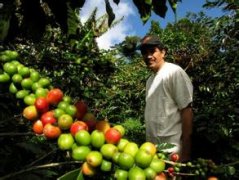
Interpretation of the name of coffee beans Why coffee beans have such a long name?
Why do coffee beans have such a long name? Why is there a single item, deep roast and Italian style of coffee? How is this distinguished? When you walk into a coffee store or open the website of a professional coffee and bean seller, you may be confused by the dazzling variety of coffee names. Why do coffee beans have such a long name? Why is there a single item, deep roast and Italian style of coffee? How is this divided?

Characteristics of coffee producing areas in Africa what are the flavor characteristics of Ethiopian coffee beans that can be gentle and lasting?
Professional coffee knowledge exchange more coffee bean information please follow the coffee workshop (Wechat official account cafe_style) front street-Ethiopia Coffee introduction as the birthplace of coffee, Africa is a land covered with game beans, the African continent is well-deserved to produce some of the world's top coffee. African beans have a unique aroma, wild taste, mostly with sour red wine, such as Ethiopia.

Coffee from main producing areas in Tanzania Kilimanjaro Coffee Kilimanjaro Mountain Fire area
Tanzania's main coffee producing area, located at the foot of Mount Kilimanjaro, is rich in volcanic soil. Some coffee trees planted here are more than 100 years old. Coffee was first introduced by Christians from Kenya to grow coffee. Coffee trees must be carefully taken care of, weeded and fertilized. And old branches must be cut off so that new branches can grow to maintain the quality of coffee beans.

Ethiopian high-light Gucci coffee scam! Is Sidamo GU JI quality / batch or production area?
Professional coffee knowledge exchange more coffee bean information Please follow the coffee workshop (Wechat official account cafe_style) recently brushed beans on a treasure, happened to see a store selling Ethiopian coffee beans, originally, colleagues have to save some face, some tricks no one is bothered to expose, but this time we see is the most outrageous in history

Coffee beans can be planted there in China. Environmental characteristics, varieties and taste manor.
The main producing areas are Sumatra, Guawa and Sulawesi. 90% of them are Robbas species, which can be rated as the first in the world in quality. Sumatra is best known for its rich, catchy and upscale Mantenin. In addition, Mount Jiayu is also produced in the north of the island, while Arabica in Guawa has a good sour taste, especially loved by the Dutch. What Sulawesi produces is a large-grained Carlo.

Interpreting the name of coffee beans, why does coffee have individual items, deep roasting and Italian style?
Why do coffee beans have such a long name? Why is there a single item, deep roast and Italian style of coffee? How is this distinguished? When you walk into a coffee store or open the website of a professional coffee and bean seller, you may be confused by the dazzling variety of coffee names. Why do coffee beans have such a long name? Why is there a single item, deep roast and Italian style of coffee? How is this divided?

What coffee producing areas are there in Ethiopia? Ethiopian Coffee beans Story
Professional coffee knowledge exchange more coffee bean information Please follow Coffee Workshop (Wechat official account cafe_style) Coffee originated in East Africa in Ethiopia, and there are as many as 5,000 wild coffee bean varieties found in the forest of the Kaffa region in the south. It is generally believed that Ethiopia is the birthplace of coffee. Local residents found that cattle and sheep grew a kind of red fruit after eating.

Processing of fresh coffee beans
Wet treatment requires the use of specific equipment and a large amount of water. When properly operated, it can ensure that the original quality of coffee beans is better preserved, producing homogeneous coffee beans with few bad beans. As a result, coffee beans produced in this way are generally considered to be of better quality and charge higher prices. Even after careful harvest, a certain amount of underdried and undercooked coffee

Kilimanjaro Coffee producing area introduces Kilimanjaro, the highest mountain in Africa in northeastern Tanzania
Tanzania's main coffee producing area, located at the foot of Mount Kilimanjaro, is rich in volcanic soil. Some coffee trees planted here are more than 100 years old. Coffee was first introduced by Christians from Kenya to grow coffee. Coffee trees must be carefully taken care of, weeded and fertilized. And old branches must be cut off so that new branches can grow to maintain the quality of coffee beans.

Introduction of Columbia Huilan coffee bean roasting degree grinding scale taste variety manor producing area
The coffee produced by a production combination of two hundred and ninety-six families near the city of Bitlid, south of Huilan County, Colombia. The average cultivated area of producers in the city of Bitlid is 2.5ha, and the elevation is about 1500 meters. The soil here is slightly acidic, and the coffee produced will be sweet and refreshing if roasted properly; the legendary Colombian traditional washing method is produced here.

Introduction of boutique coffee beans Latin American coffee
Latin America (Latin America) in 1721 French naval officer de Klee (Gabriel Mathieu de Clieu) experienced difficulties and obstacles to bring the first coffee sapling from Africa to the Latin American island of Martinique, which was the origin of coffee cultivation in Latin America. Because at that time, France was under the reign of the Bourbon dynasty, and Elaraby was grown in Latin America.

Does drinking coffee cause cancer? How is acrylamide, a carcinogen in coffee, produced?
Professional coffee knowledge exchange more coffee bean information please pay attention to the coffee workshop (Wechat official account cafe_style) you should know the food coffee roasting temperature can exceed 200 degrees, is enough to produce acrylamide temperature, but in fact per 100 ml of coffee, acrylamide content is only about 5 to 20 micrograms, moderate consumption will not cause human harm. Write = make a living

Description of flavor and taste characteristics of coffee beans in Huilan area of Colombia how much water is used to make coffee beans by hand
Professional coffee knowledge exchange more coffee bean information Please follow the coffee workshop (Wechat official account cafe_style) Colombian coffee is characterized by full particles, rich nutrition, moderate acidity, good balance, rich aroma and soft taste. Most Colombian coffee beans are picked.

Characteristics of Tanzanian Coffee with excellent Flavor introduction to manors in Tanzanian coffee producing areas
Tanzania's main coffee producing area, located at the foot of Mount Kilimanjaro, is rich in volcanic soil. Some coffee trees planted here are more than 100 years old. Coffee was first introduced by Christians from Kenya to grow coffee. Coffee trees must be carefully taken care of, weeded and fertilized. And old branches must be cut off so that new branches can grow to maintain the quality of coffee beans.
Encyclopedia of coffee beans
Coffee beans are washed and dried, flat beans and round beans. The coffee beans are dark and light in color. Through deep roasting, the coffee beans explode, doubling in volume and reducing their weight by nearly 1 inch 4. In the process of roasting, coffee beans gradually produce volatile flavor oil, so that various flavors can reach a perfect balance. Even in the same producing country, coffee beans will be due to the climate, altitude and soil quality of different regions.

Coffee Common sense Latin American (Latin America) Coffee and roasting
In 1721, French naval officer Gabriel Mathieu de Clieu went through difficulties and obstacles to bring the first coffee sapling from Africa to the Latin American island of Martinique, which was the origin of coffee cultivation in Latin America. Because France was under the Bourbon dynasty at that time, there was another time for Arabica coffee grown in Latin America.

Characteristics of Latin American coffee beans Latin American coffee flavor
Latin America (Latin America) in 1721 French naval officer de Klee (Gabriel Mathieu de Clieu) experienced difficulties and obstacles to bring the first coffee sapling from Africa to the Latin American island of Martinique, which was the origin of coffee cultivation in Latin America. Because at that time, France was under the reign of the Bourbon dynasty, and what was grown in Latin America